
European University RadiOsonde Partnership (EUROP)
Overview
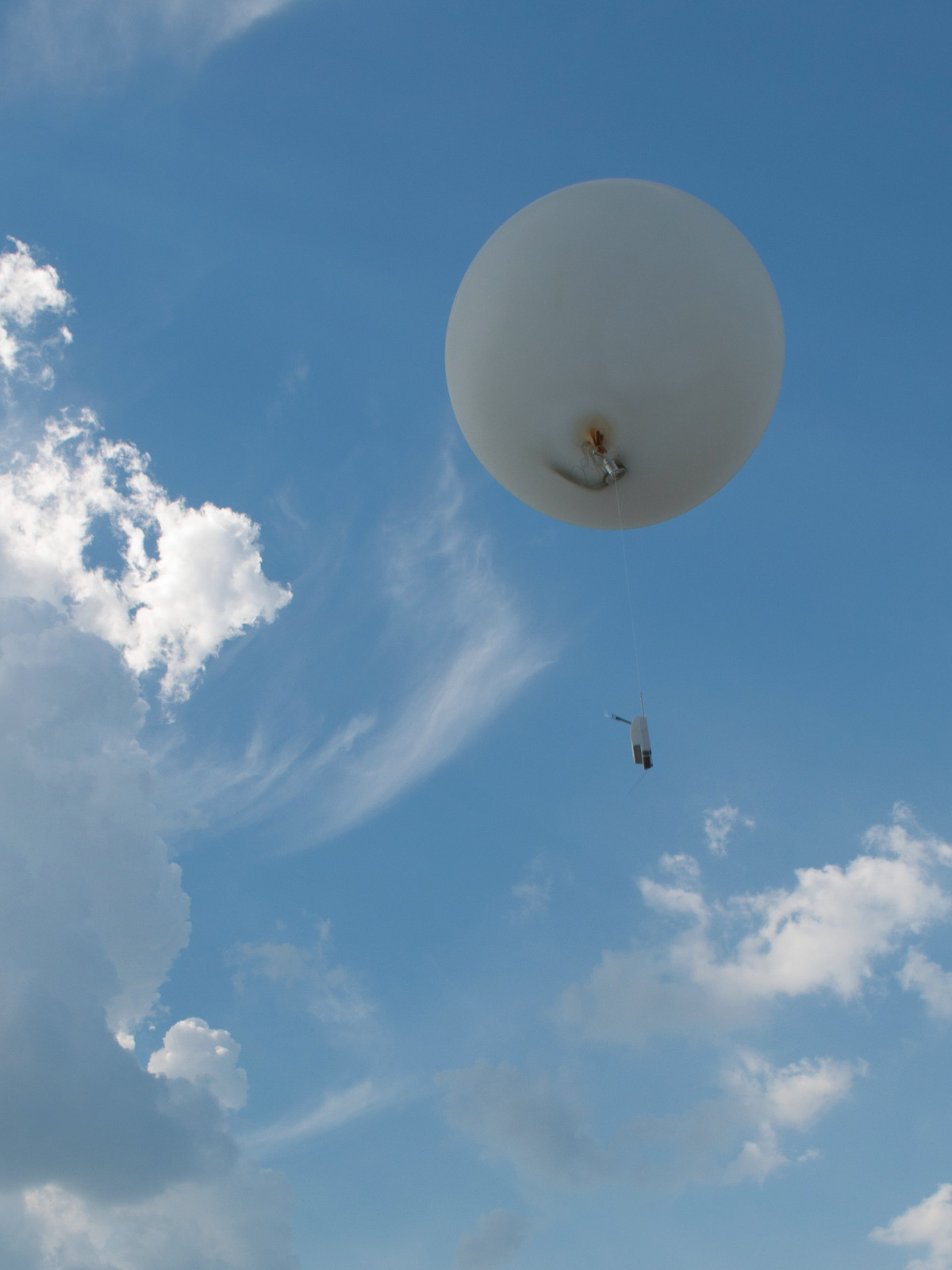
EUROP is a collaborative network of European universities and weather services, that was initiated to support the NAWDIC field campaign in January and February 2026. The initiative aims to obtain additional radiosonde observations from several European locations to be assimilated directly into global weather forecasting systems, such as the ECMWF system. Thus, the effort has a direct impact on the quality of the numerical weather prediction (NWP). In addition to the scientific goals, EUROP aims to provide an exciting educational opportunity to involve students in an international field campaign. During the NAWDIC campaign in 2026, three universities and five weather services participated with more than 140 radiosonde launches during intensive observation periods (IOPs), supported by 30 student helpers in total. EUROP is paired with analogous partnerships connecting universities across North America (the AR Recon Coordinated University Sounding Program (CUSP)) and will emphasize the importance of radiosonde launches and meteorological observations for forecast quality and research activities.
The following universities and non-university partners were involved in EUROP to support the NAWDIC campaign in 2026:
- the University of Helsinki (Finland)
- the University of Cologne (Germany)
- the University of Évora (Portugal)
- Regional Agency for the Development of Research, Technology and Innovation (Portugal)
- Institute of Meteorology and Water Management - National Research Institute (Poland)
- MeteoSwiss (Switzerland)
- Valentia Observatory, Met Eireann (Ireland)
- German Weather Service (Germany)
the EUROP steering group:
- Jacopo Riboldi (ETH Zurich)
- Julian Quinting (University of Cologne)
- Bastian Kirsch, Alexandre Ramos (KIT)
- David Lavers (ECMWF)
EUROP launches during GARRP Demo 2027
After a very successful first year of operation, we are happy to announce that EUROP will continue in the upcoming winter season 2026/27. The main goal will be to provide downstream observations for the second phase of the airborne measurement campaign NURTURE, scheduled to operate from Goose Bay (Canada) between 15 January and 1 March 2027. Furthermore, it will contribute to the demonstration mission for the Global Atmospheric River Reconnaissance Program (GARRP) in 2027.
As a collaborative grassroot initiative, the success of EUROP fully depends on the commitment of its local partners. If you are interested in participating in EUROP 2027, either as a current or new member, please fill out the following survey by the end of September 2026: https://opnform.com/forms/europ-2027-9oukmu
Dry Run for NAWDIC (Dec 2025)
The European University Radiosonde Partnership (EUROP) officially took off on 9 December 2025, with the first EUROP Dry Run. Radiosonde launches were planned on that day to test the capabilities and the workflow of the involved partner universities. Furthermore, the retrieved data of one sonde were then integrated in the assimilation cycle of the IFS and ICON numerical weather prediction models.
The partnership consists of three participating universities so far: the University of Helsinki (Finland), University of Cologne (Germany), and the University of Évora (Portugal). The team will also profit of the collaboration with the Institute of Meteorology and Water Management National Research Institute (Poland) and the Regional Agency for the Development of Research, Technology and Innovation (Portugal) to obtain additional radiosonde launches.
With the Dry Run, the EUROP team is preparing for the main observation period of NAWDIC, which will start on 13 January 2026. Over the coming weeks we will finalize logistics, further integrate the student generated observations with the global observational network, and continue to engage with the broader NAWDIC community.
EUROP Poster
EUROP poster contribution to the 2026 AR Recon workshop and 2nd Observational campaigns workshop for better weather forecasts in Reading (UK) from 29 June to 3 July 2026.
Mailing List
If you interested in participating in future activities of EUROP, please subscribe to the mailing list europ(at)lists.kit.edu by sending an empty e-mail with the subject "subscribe europ [your first name] [your last name]" to sympa(at)lists.kit.edu.
In memory of Victoria Sinclair (University of Helsinki), whose dedication, enthusiasm, and collaborative spirit were an inspiration to all involved in the NAWDIC–EUROP initiative.